


15 Jan From emojis to memes: Decoding the digital dialect for marketers
By Mark Stecker
Whether you’re a Gen Z who communicates in gifs or a Boomer who doesn’t know their 🤣from their 😭(it’s a problem), emojis, gifs, and memes are part of how we express ourselves every day.
If you’re a CMO or marketing manager who’s older than the intern, you probably never thought you’d have to get a handle on a language within a language, but here we are. That’s because, depending on your audience, emojis and memes can boost your brand’s relatability and reach.
Here’s how to do that – but first, how did we even get here?
The evolution of emojis
Along with relevant content, how your brand communicates with its audience is everything, and emojis can play an important role by setting a more human tone; in fact, using them strategically helps make it more likely to increase conversions and close the sales loop. We’re not making that up: 44 percent of people are more likely to buy products advertised that use emojis, and 56 percent of brands that use emojis in subject lines have a higher unique open rate.
So, how did random pictures that stand in for words, feelings, and ideas even come about?
You’ll need to rewind back to the late ‘90s when grunge and bomber jackets were a thing (a time before the intern was born). Back then, cellphones had just come out and were the size of a small hybrid car.
Enter emojis that first appeared on Japanese mobile phones in 1999. Created by Shigetaka Kurita, they were initially a set of small pictograms, totalling 176 emojis, developed for an early mobile internet platform to convey symbols as concepts rather than using words. Like hieroglyphics, but for gamers.
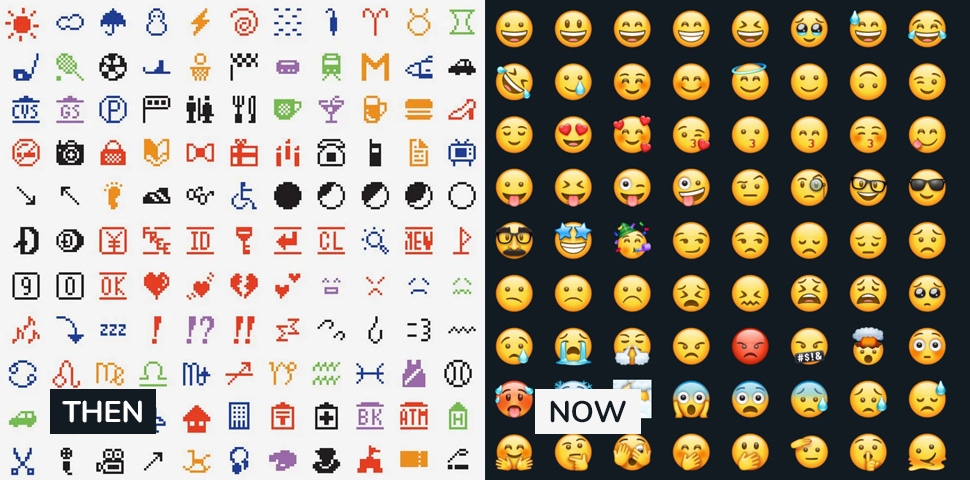
Emojis took off in 2010 (about 10 years after the intern was born), when Unicode officially adopted emojis, adding many more in the process (like the cry-laughing cat face). That was a big deal, as Unicode is a text encoding standard that supports text in all the world’s major writing systems. In Unicode, every character gets a unique code so it can be displayed no matter the platform, device, application, or language. For example, in Windows, if you type 1F60E, and then hold down alt+X, you get 😎. That’s the magic of Unicode.
There are over 3,600 emojis, with more added each year by the Unicode Consortium. Anyone can submit proposals on new emojis, which the consortium then decides to accept or reject (they might be the emoji Illuminati, we’re not sure).
Gifs are the weird cousins of emojis. Developed in 1987 (the intern was but a twinkle in their father’s eye) by an internet service provider, they were initially used to reduce the size of images and short animations. A gif contains static images displayed in rapid succession, creating a looping animation that’s easy to share. Like emojis, gifs are used to express emotions without words, and like memes, they tap into what’s going on culturally.
What’s in a meme?
We could write a dissertation on memes alone (we’re clever like that), but the word “meme” was coined by the world’s most famous atheist, Richard Dawkins, in his 1976 book, The Selfish Gene. Here, Dawkins basically says that a meme is like a virus. It’s a piece of information or behaviour that self-replicates because humans like to share things. For a meme to take off, however, it must represent the thoughts and feelings of a specific audience. This is why 36 percent of millennials and Gen Zs use memes to express feelings, and why many in both demographics will only share a meme if there is something in it that they can relate to.
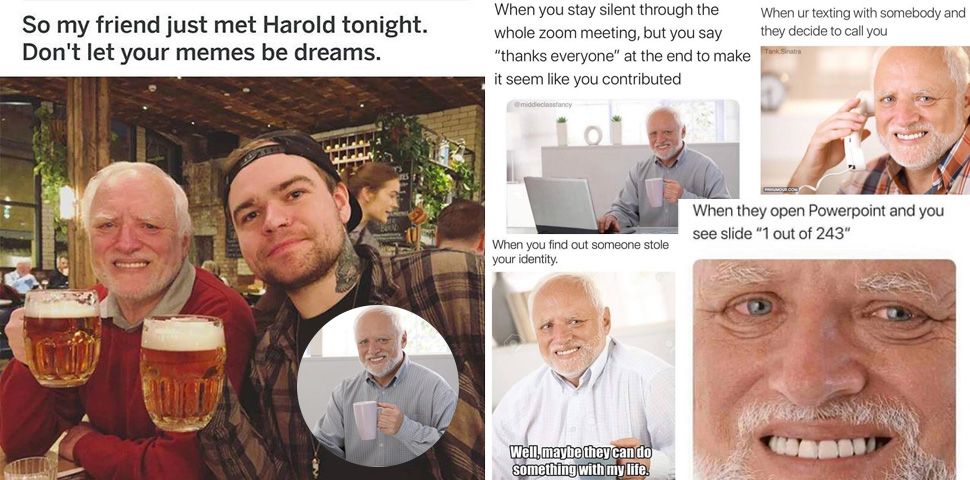
If you want to know how a particular meme originated, check out knowyourmeme, where you can read about memes like Hide the Pain Harold (the old guy with the grimace who pops up from time to time; spoiler: he’s a Hungarian man who used to be a stock photo model).
How to use emojis, gifs and memes (and how not to)
Emojis and their ilk add playfulness and relatability to your brand, but only if you use them at the right time, in the right context, and for the right audience. Proceed with caution, as misaligning any of these will mean your meme falls flat, or worse, could be misinterpreted (can anyone say, “Cancelled!”).
The emojis, gifs or memes you use must reflect your brand voice (so, if your brand belongs to a corporate financial advisory, they probably won’t fit, but a young fintech start-up could work). We say this all the time, but you also need to know your audience: what makes them tick and what makes them snort their morning coffee out their noses.
Watch out for context, too, as some emojis mean different things to different generations and cultures. Hopefully, by now, we all know about 🍑🍆, and that for Gen Z 💀means dead from laughing, not literally ⚰️.
With any meme, gif, or emoji, the rule of thumb is to check yourself before you wreck yourself (the intern won’t get that reference).
Emojis, gifs, and memes have become part of how we engage with each other, and effective Using the wrong emoji or an ill-timed meme can be a minefield, but if you know how and when to leverage them, they’re a goldmine. Use this digital language to connect with your audience and add reach and resonance. Or, at the very least, make the intern laugh…
Enjoyed this article? Share it with your peers so you look clever. Need help with meme marketing? Contact us; we do that 🔥💧